
The key takeaway
Plan the full event lifecycle—vendor access, guest entry, the program, departure, and handover—not only the front door.
Understand the venue and guest flow
Start with the venue layout, attendance expectations, guest profile, and program schedule. Identify queues, entrances, exits, parking routes, restricted areas, and accessible routes. Staffing should reflect those conditions rather than rely on a universal guard-to-guest ratio.
Coordinate with venue management and the event organizer. Confirm capacity rules, required permits, emergency arrangements, and who can make an operational decision. Officers need one clear command structure when different teams give conflicting instructions.
Make access rules clear before opening
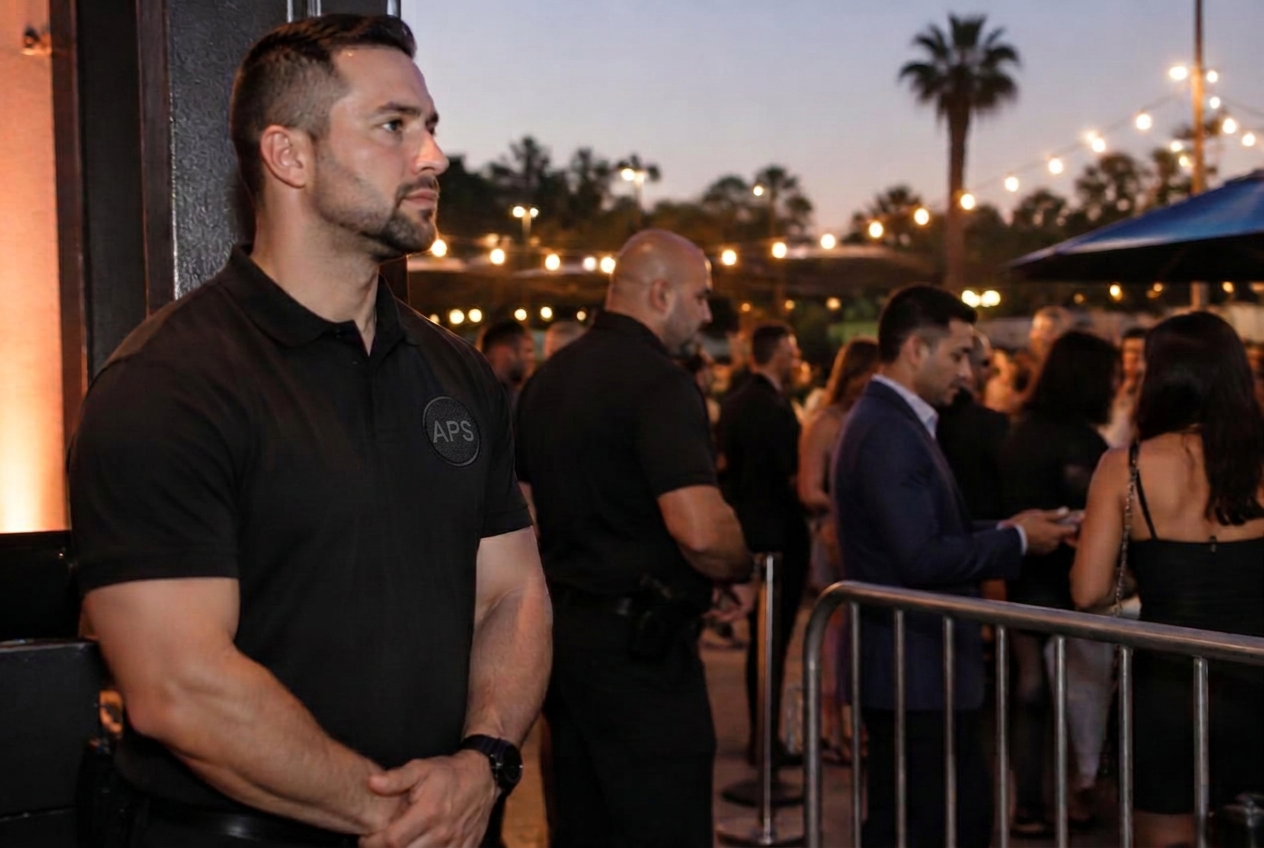
Explain tickets, credentials, guest lists, vendor approval, and any permitted screening procedure. Guests should understand the policy before reaching the checkpoint. Any bag check or screening must follow the event’s lawful policy and the officer’s training.
Prepare a response for a lost credential, an upset guest, or a blocked entrance. Calm communication and a designated supervisor help staff resolve issues without creating unnecessary crowd pressure or disrupting the program.
Keep safety and departure in the plan
Maintain access for emergency responders and keep exit routes unobstructed. Security should know how to request medical help and communicate an emergency, but should not be described as providing medical services unless that is separately arranged with qualified personnel.
Departure may require its own staffing: parking areas, vendor collection, backstage close-out, and a final authorized sweep. End with a written handover of incidents, remaining concerns, and any property issues so the organizer is not left guessing.
Your practical checklist
- Review the venue, exits, and expected guest flow.
- Define credentials and lawful screening policies.
- Assign an event decision-maker and escalation chain.
- Schedule departure and close-out coverage.
Is there one correct number of guards for every event?
No. Staffing depends on venue layout, attendance, activities, risk, access points, and applicable requirements. A site-specific review is more useful than a blanket ratio.
Official references & further reading
Educational information, not legal advice. Practical recommendations are not guarantees of results or a statement that every feature is included in every APS assignment. Regulations and availability can change; verify current official requirements and confirm your written scope.